

Bystrica Castle
The history of the Upper Povazie region is closely linked to the Bystrica Castle. On the right bank of the Váh, about 3 kilometres north of Považská Bystrica, at an altitude of 497 metres on a limestone cliff, stands Považský hrad, also called Bystrický hrad or Bystrica hrad. The castle was built in the 13th century after the Tatar invasion of Hungary and served as a royal castle. Due to its strategic location, it was part of the fortress system of the Central Povazie region. At the beginning of the 14th century the castle was taken over by Matúš Čák Trenčiansky, during whose reign in 1316 the first written mention of the castle was recorded. Among the other owners, the robber knights, the brothers Rafael and Ján Podmanický, who reached the peak of their power in 1540, when the whole northern part of the Trenčín region became independent under their leadership (they occupied castles from Nové Město through Košec, Lednice, Hričov to Budatín), were the most significant in the history of the castle. From the second half of the 16th century the castle belonged to the Balassa family, who carried out reconstruction and repairs, but eventually abandoned the castle. The end of its glory came in 1698, when the imperial army partially demolished and burned it down for fear of being settled by rebels. From 1714 the castle was owned by the Sapari family, who also did not use it, so it gradually fell into disrepair.


An extremely valuable testimony of the inner life of the town is the document called “Articuli Podmanickyani” from 2 January 1506, by which Jan Podmanický establishes in 30 articles the municipal statute of the town of Bystrica. It mentions, among other things, the guilds of butchers, weavers, shoemakers and the existence of a “folk” school. Považská Bystrica was, together with Varín, the only town in Slovakia where Slovak was used as the exclusive language of the guild masters. In 1571, King Maximilian added two more fairs to the two fair festivals on the Three Kings’ Day and the Holy Trinity Day. In 1656, the ruler Ferdinand III granted the town further privileges by confirming the fairs on the Monday after Palm Sunday and on St. Lawrence’s Day. At the request of the citizens, the landowners further confirmed the old right of tapping during the fair and allowed the construction of one sawmill on the higher mill. In 1716, the Protocolum privilegiati oppidi vagh Besterze (Protocolum privilegiati oppidi vagh Besterze) began to record the municipal affairs in a systematic way. From the records we learn that the head of the town was the richtár, elected according to custom on St. George’s Day, legal matters were handled by an elected notary, and the town’s property was managed by the municipal housekeeper – the landlord. The town also employed gamekeepers, shepherds and a herald.From the town’s point of view, the 19th century can be called the century of disasters. The town was plagued by floods, fires and epidemics. From contemporary documents we can read, for example, that:
“from 23 to 26 August 1813, it rained continuously for four days, which caused the Váh River to be swollen. The water downstream swept away logs, trees, whole houses, people and cattle. The damage amounted to millions, and more than a hundred people died in Považská Bystrica.”
“On August 6, 1831, the cholera cut its first victims among the townspeople, and was not appeased until September 14, 1831. In all, 135 people perished.”
” In 1832 one part of the town burnt down, in 1834 the other part. “
“On February 15, 1858 at 8 o’clock in the evening there was a strong earthquake in the vicinity of Bystřice Castle, when the tower of the castle prison collapsed.”
The law of 1886 eliminated all privileged differences between the municipalities, Považská Bystrica as a serf town lost its status under the law and became a small municipality, but only until 1 March 1914. The county congregation in Trenčín elevated it to a large municipality. The development of social life came only after 1918. Various associations, schools and small businesses were established. A great benefit for the town was the relocation of the production of the Bratislava munitions factory of the Roth company. The foundation stone for the construction of the new factory was laid on 7 July 1929. New job opportunities and a growing population were also associated with the construction of housing, cultural, social and sports facilities. During the Second World War, the development of Považská Bystrica reached such a stage that the municipality decided to apply for the status of a town, which was granted to it by the Board of Supervisors at a meeting on 25 June 1946. In 1948 Považská Bystrica became a district town.
The complete transformation of the old town into a new one, which took place in the 1970s and 1980s, changed its character. New housing estates were built, various hotel and restaurant facilities were added, and the town’s roads and car parks were reconstructed.
Calvary
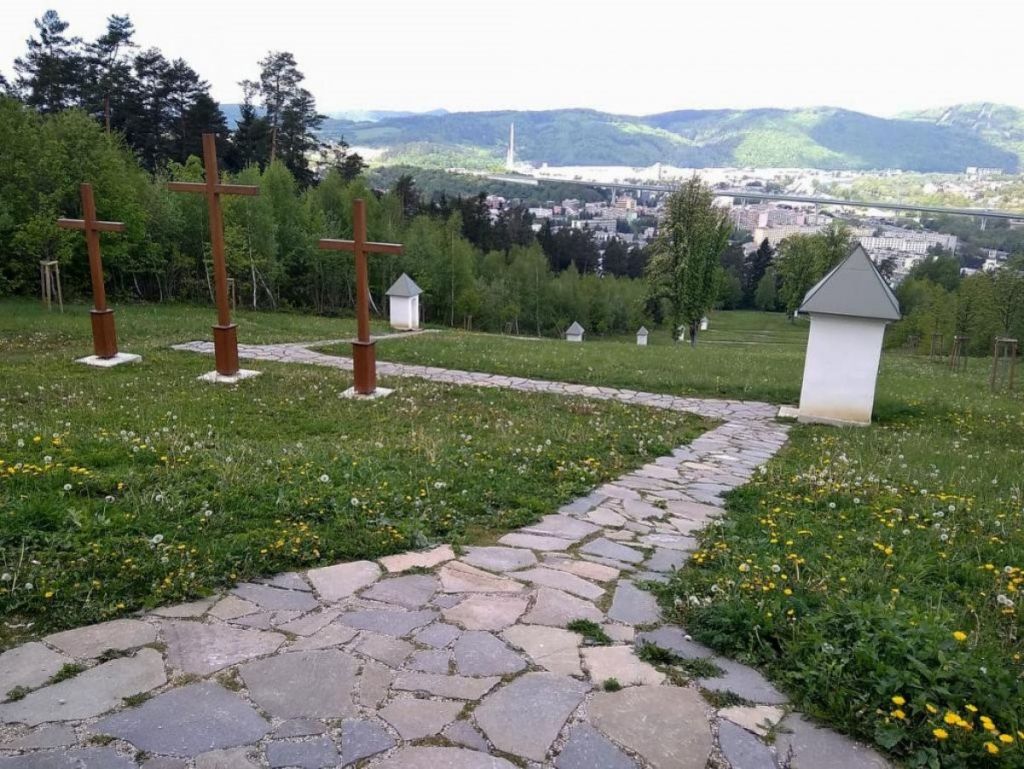
The Calvary built on the hill called Háj is an important historical monument of the town of Považská Bystrica. Since most of the archival documents are lost or stolen, we can only know the history of the Calvary in fragments. The basic source of the monument was the book Protocolon privilegiati oppidi Vágh-Beszterce fieri curvit anno 1716, which recorded events from the history of Považská Bystrica until the 1870s. The initiative for the construction of the Calvary was taken by the town and its leading townspeople. During the first stage of construction, the Chapel of St. Mary Magdalene and the Crucifixion sculpture were built. In the second phase, the chapels of the individual stops were built. In 2014, the town began renovation work, which included the restoration of the Chapel of St. Mary Magdalene, the restoration of the individual Stations of the Cross, and the addition of new sidewalks and greenery so that the Calvary could serve its original purpose.
Museums in Považská Bystrica
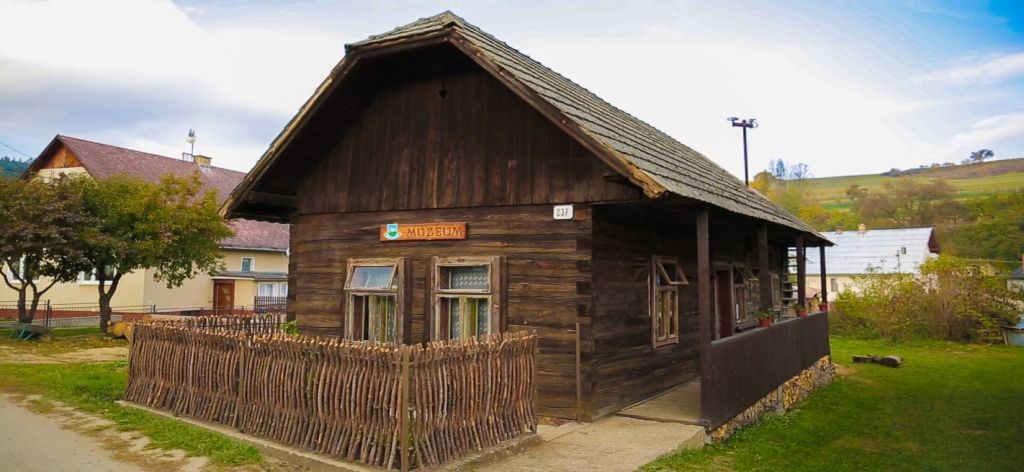
The museum in Horní Moštenec was established in 2011 after the citizens of the district decided to save a dilapidated wooden cottage from 1932 in an effort to preserve a piece of history. The museum has gradually managed to collect a number of old photographs, documents and over 200 exhibits, which bring visitors closer to the history, traditions and customs of the ancestors of this part of the town. The museum consists of three parts – a kitchen, a room and a room with farm tools. You can take part not only in guided tours of the museum, but also in activities that are regularly held here, such as the scratchers, carnivals, an ancient Christmas dinner, knitting korbáčs or painting easter eggs.
The private museum of the enthusiast Ladislav Janech in Považská Teplá consists of five rooms displaying exhibits he has been collecting since 1988. In the museum, we can see archaeological finds, minerals, coins and various means of payment from the time of ancient Rome to the present day, as well as products of ancient crafts, various tools used for work and subsistence, parts of clothing and so on.

Municipality Nimnica
On the territory of today’s Nimnice village there was a settlement from the Latin Age and the Púchov culture from the Roman Age. The village is mentioned in 1408 as Nywnycze, in 1469 as Newnicze, in 1598 as Nywnicza, in 1773 as Okrut Nemnica. It belonged to the manor of Lednica, partly to the landowners. In 1598 it had 39 houses, in 1720 it had 15 taxpayers, in 1784 it had 54 houses, 64 families and 306 inhabitants, in 1828 it had 31 houses and 369 inhabitants. A significant event for the village was the construction of the Youth Dam, now Nosice, which began in 1949 and was completed in 1957. During the construction of the reservoir, a strange spring was discovered near the boreholes, the water of which was salty and fizzing. For this reason, the construction of a spa was started, which was completed in 1959. The spa gradually grew to its present form.

Water reservoir Nosice, in the background Nimnica Spa
Municipality Papradno
The first written mention of Papradno dates back to 1525, but people lived in its valley as early as the Late Stone Age, as evidenced by the discovery of fragments of a sharpened axe. However, a larger settlement, mainly by Wallachian colonization, came only in the 14th-16th centuries, when Papradno was part of the feudal manor of Bytča. In the 15th century the village – then as a chotár – separated from the original chotár Veľká Jasenica. The symbol of this settlement is a preserved imprint from 1757 – a coat of arms with the sign of a standing ram on a ram’s armpit, which was still used by the richtars for many years. In 1619 a stone mill was built in the village and shortly afterwards a mill for processing woollen textiles. In the 19th century, a local distillery was used here and according to some sources there was also a count’s paper factory.


Municipality Horná Mariková
The settlement of the village dates back to truly ancient times, as evidenced by the discovery of a stone axe in the settlement of Stolečné, as well as other finds of pottery, armour, tools and old jewellery. The first written mention of the village dates back to 1231. Until 1954 there was only a village called Mariková, in that year the village was administratively divided into Dolná and Horná Mariková. The original inhabitants were influenced by the Wallachian colonisation, and in addition to special privileges and rights, they also had their own duke, who resided here for some time. The Wallachians later changed to a more settled way of life. They were engaged in agriculture, mainly cattle breeding and sheep breeding, as well as in the extraction, sale and processing of timber. The distinctive Marikov dialect has been preserved in part. The living conditions in the village were very difficult, requiring a great deal of resilience, perseverance and resourcefulness on the part of the population. In the first years after the establishment of 1. In the first years of the first years of the Czechoslovak Republic, many inhabitants went abroad, the destination countries being mainly America, France and the Czech Republic. Nowadays, the character of the village is changing into a tourist-recreational-recreational area. Only 240 houses are permanently inhabited in the village, more than 540 buildings are now used as cottages, chalets and guesthouses.

Municipality Vrchteplá
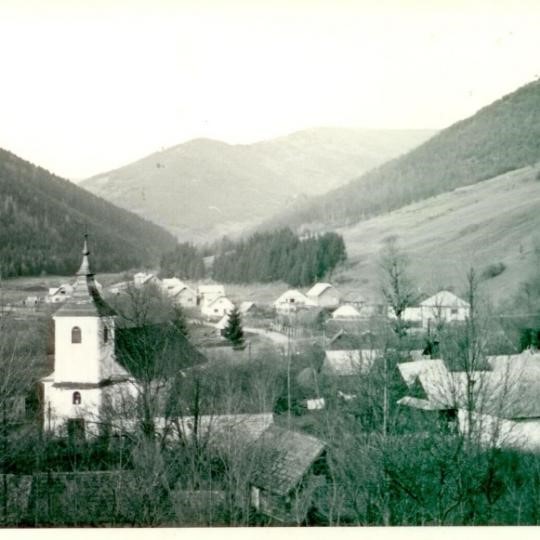
The first known written mention of the village dates back to 1351. It is a document by which King Ludovít I ordered the Nitra Chapter to put Mikuláš, son of Adrian of Podmanín, and Pavel, son of Tanak of Teplá, in possession of the forest property called Lúčka. In the 15th and 16th centuries the village changed its name several times: from the original Werch through Toppla to Wrchtepla in 1598, when there were only 18 houses in the village. The modern history of the village is connected with the events of the Slovak National Uprising, during which heavy fighting between partisans and Germans took place near the village.

Village Záskalie
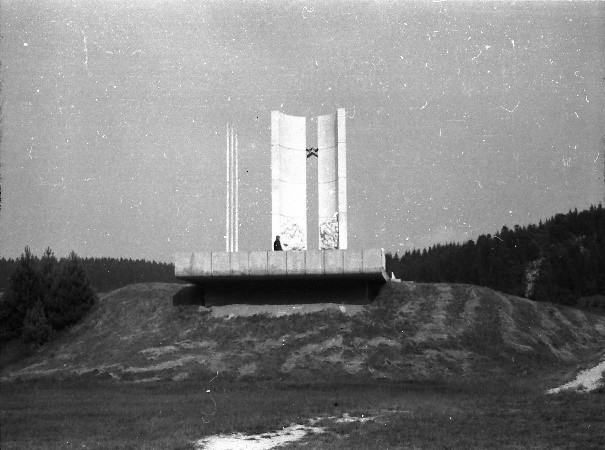
Chonkakwmegye – this is the different name of Zaskalia according to written documents from 1379. Initially, the village belonged mainly to the equal Záskalský, Zamarovský, Klobušický and Podmanický families, but later – like the surrounding villages – it was taken over by the manor of today’s Považská Bystrica. In the past, the inhabitants of Záskalí were mainly engaged in peasantry, woodcutting and wagon driving.

Municipality Pružina
The territory of the village was inhabited as early as the 9th century. In the nearby site of Mesciská, the remains of a hillfort, once an important local centre of the village’s ancestors, are spread out today. The first written mention of Pružina dates back to 1272, when the village belonged to the manor of Košeca. In the 13th century it became the property of the landowning families of Pružinský and Lieskovský. Pružina was a typical mountain village, where the inhabitants lived mainly by sheep and cattle breeding, agriculture and logging. Its history is complemented by cultural or historical monuments and important personalities who worked here.

Municipality Plevník – Drienové
Until 1952, Plevník – Drienové existed as two villages: Plevník, first mentioned in historical documents in 1354, and Drienové, younger by more than 100 years. Both villages belonged to the Považská Bystrica manor, which was dominated by Považský hrad. Life in Plevník was mainly focused on agriculture. There was even a maltster, thanks to whom the village gained the right to brew beer. Plevník experienced rapid development in the 16th century – while in 1564 there were 8 serf houses and 2 houses of libertine freed from serfdom, by 1598 the number of houses had grown to 27. By contrast, the village of Drienové had more free inhabitants than serfs, who focused on crafts over time. From the 15th century onwards, it developed mainly thanks to its ideal location. The road along the Váh River, leading to Moravia, Poland and Hungary, was also known as a trade or military route.


