One of the approaches to the Calvary is located in the eastern part of the town of Považská Bystrica, east of its largest development under a steep hill formerly called Háj, now commonly known among the inhabitants as “Calvary“. This name was given in connection with the location of an important historical monument of the town of Považská Bystrica, which is the Calvary. As most of the archival documents are now lost or stolen, the history of Calvary can only be clarified to a certain extent. The basic source of the monument was the book Protocolon privilegiati oppidi Vágh-Beszterce fieri curvit anno 1716, which recorded events from the history of Považská Bystrica until the 1870s.
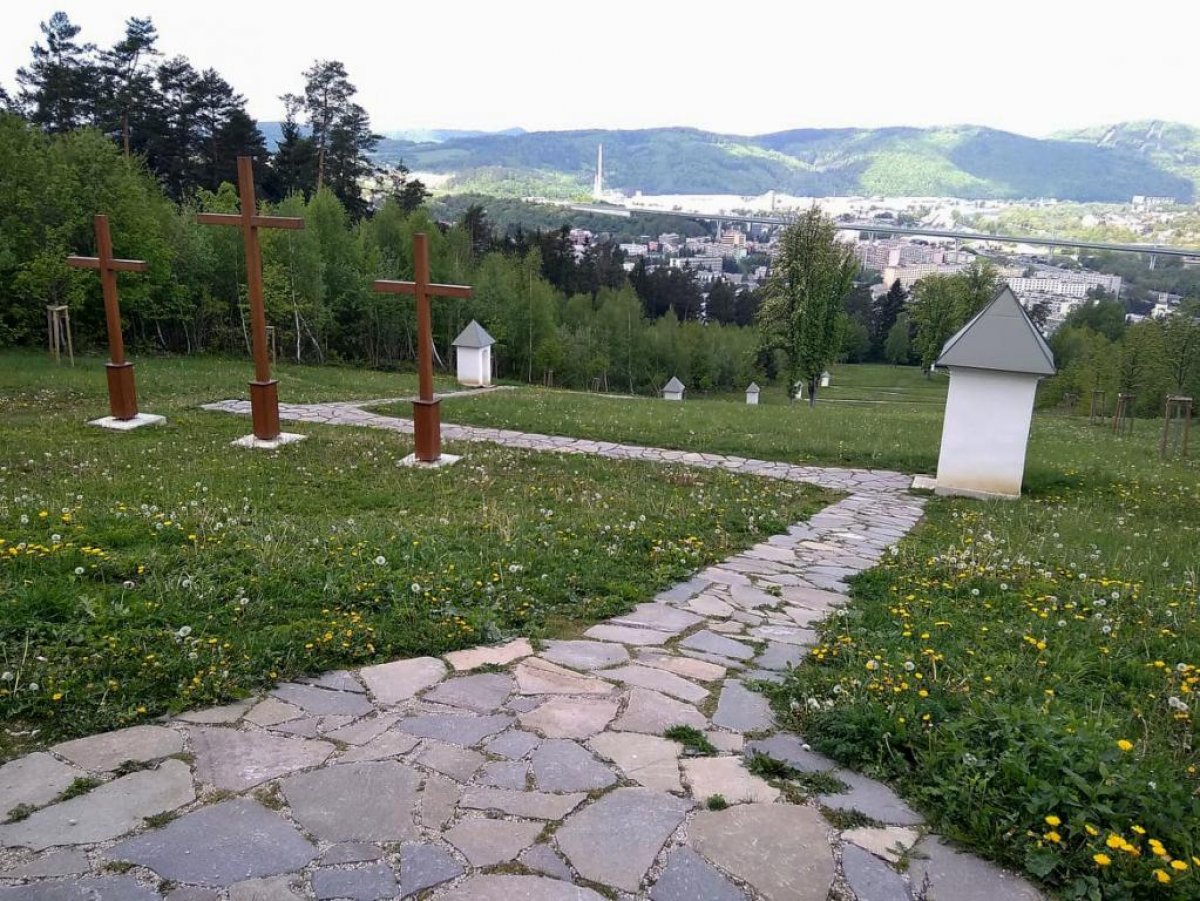
The initiative for the construction of the Calvary was taken by the town and its leading townspeople. Its construction took place in several stages. In the 1st phase (1805-1806), the Chapel of St. Mary Magdalene and the sculpture of the Crucifixion. The original painting of the interior was designed in brown, white and pink, the triumphal arch was decorated with a band of geometrically arranged tape. The chapel was built of high quality rubble stone masonry, the original roofing was shingles. The sculpture was made of stone, built of sandstone. The three crosses of the sculpture had a Latin cross with a straight termination of the arms. On the left side was crucified the good thief Dismas and on the right the evil thief Desmas.
Calvary reconstruction
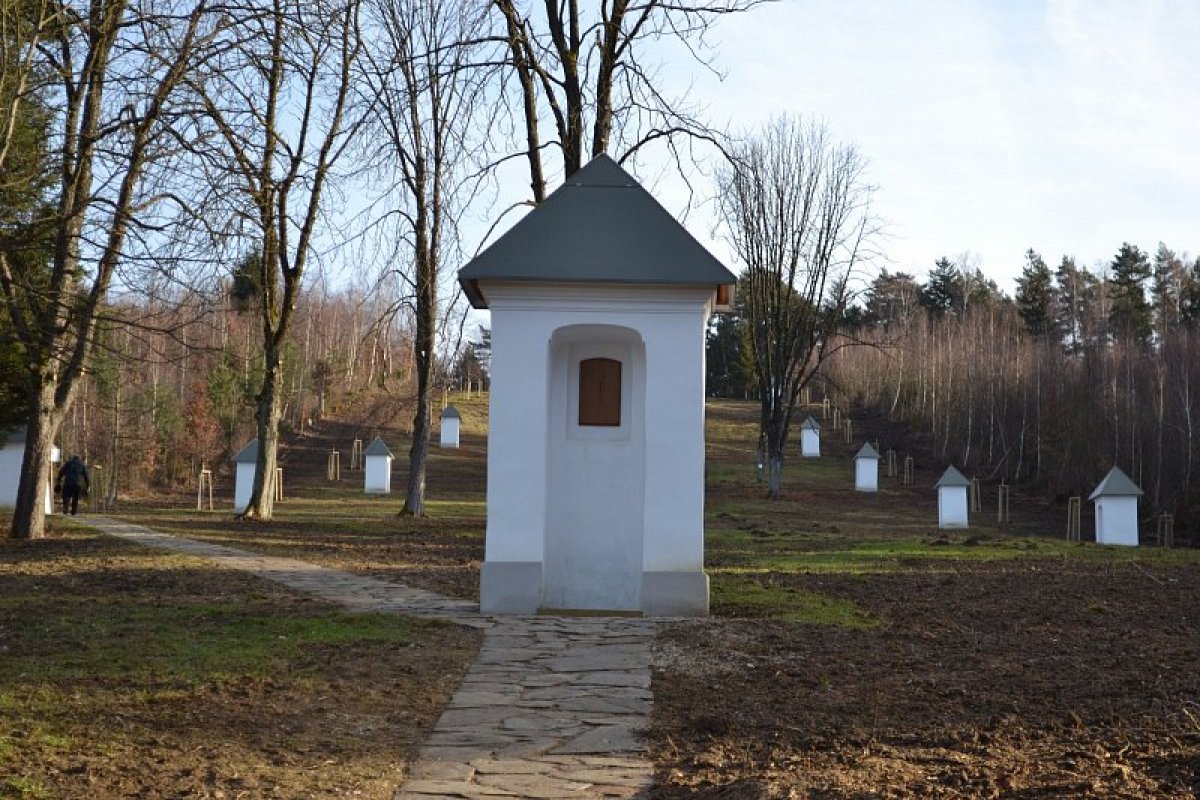
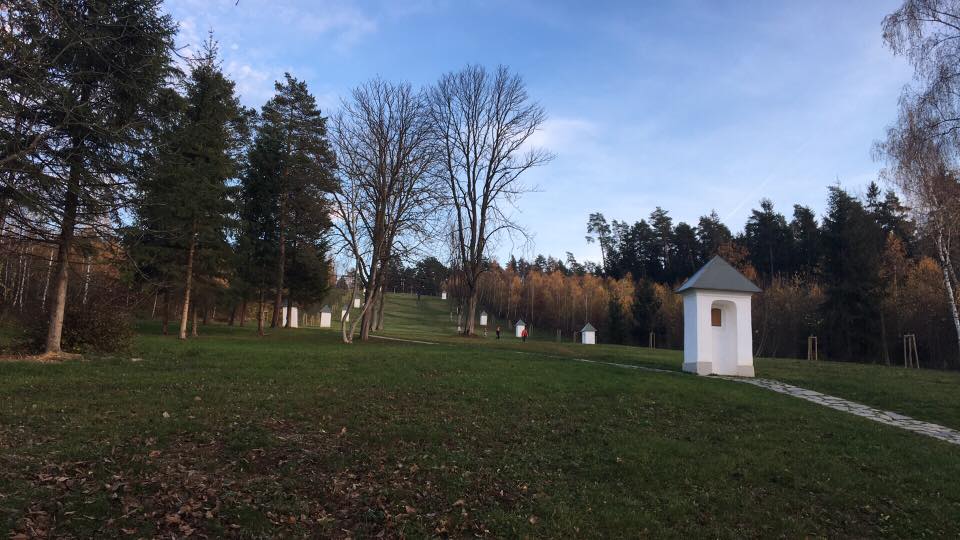
In the middle it said sculpture of Christ, St. Mary Magdalene , the Virgin Mary and St. John the Evangelist. The chapels were built as simple prismatic buildings with an open entrance niche, finished with a profiled crown cornice.The chapels were built in the 2nd phase (1815 – 1882). They were vaulted with a compressed arch with undercut footings and a rectangular niche on the back wall for the image of the halt. In Phase 3 (1937) the Calvary was repaired. The central chapel received a new roof covering (shingles) and the interior was repainted. The chapels of the stops received new tin canopies and new paintings. The renovation was carried out by the builder R. Juráček Jr. In the 1950s, a three-row straight chestnut avenue was planted between the chapels.
The second half of the 20th century, especially the 1970s-1980s, brought a slow degradation. Gradually, the Crucifixion sculpture disappeared, three chapels fell down, the upper chapel was looted, doors, window panels and the bell were stolen, the roof was rusted through and the vault of the sanctuary and nave was overturned. Preparations for the rescue and restoration of the Stations of the Cross with the central chapel began in 2004 (research, project documentation, communication with the Monuments Office ). Since 2014, restoration works have been carried out on the Calvary, which have partly restored the monument to its original form. The town took the initiative when in 2013 it acquired the land from the Parish of Považská Bystrica on a long-term lease. Thanks to the efforts and cooperation of all those involved, the Calvary once again serves its original sacred purpose and also functions as a cultivated place of rest in a natural environment.
Calvary provides relaxation and tranquillity just a short distance from the city centre. Visitors are also rewarded with an enchanting view of the panorama of Považská Bystrica – the motorway flyover, Považský hrad, the Váh river and other natural attractions, historical and modern buildings on the vast territory, which are offered to the attentive viewer as if in the palm of the hand.
The way back is recommended to take the opposite side of the hill around the gardening settlement along the dirt road, which connects to the well-maintained asphalt road, where pedestrians will get a new view of other parts of Považská Bystrica. If you decide to look for accommodation in the region visit the subpage Accommodation.